



Population: Approximately 2.5 million (2024 estimate).
Currency: Botswana Pula (BWP).
Land Area: Approximately 581,730 square kilometers.
Maximum Altitude: Otse Hill at 1,491 meters (4,892 feet).
Climate: Semi-arid with hot summers and cooler winters.
Terrain: Predominantly flat with the Kalahari Desert covering much of the country; features the Okavango Delta.
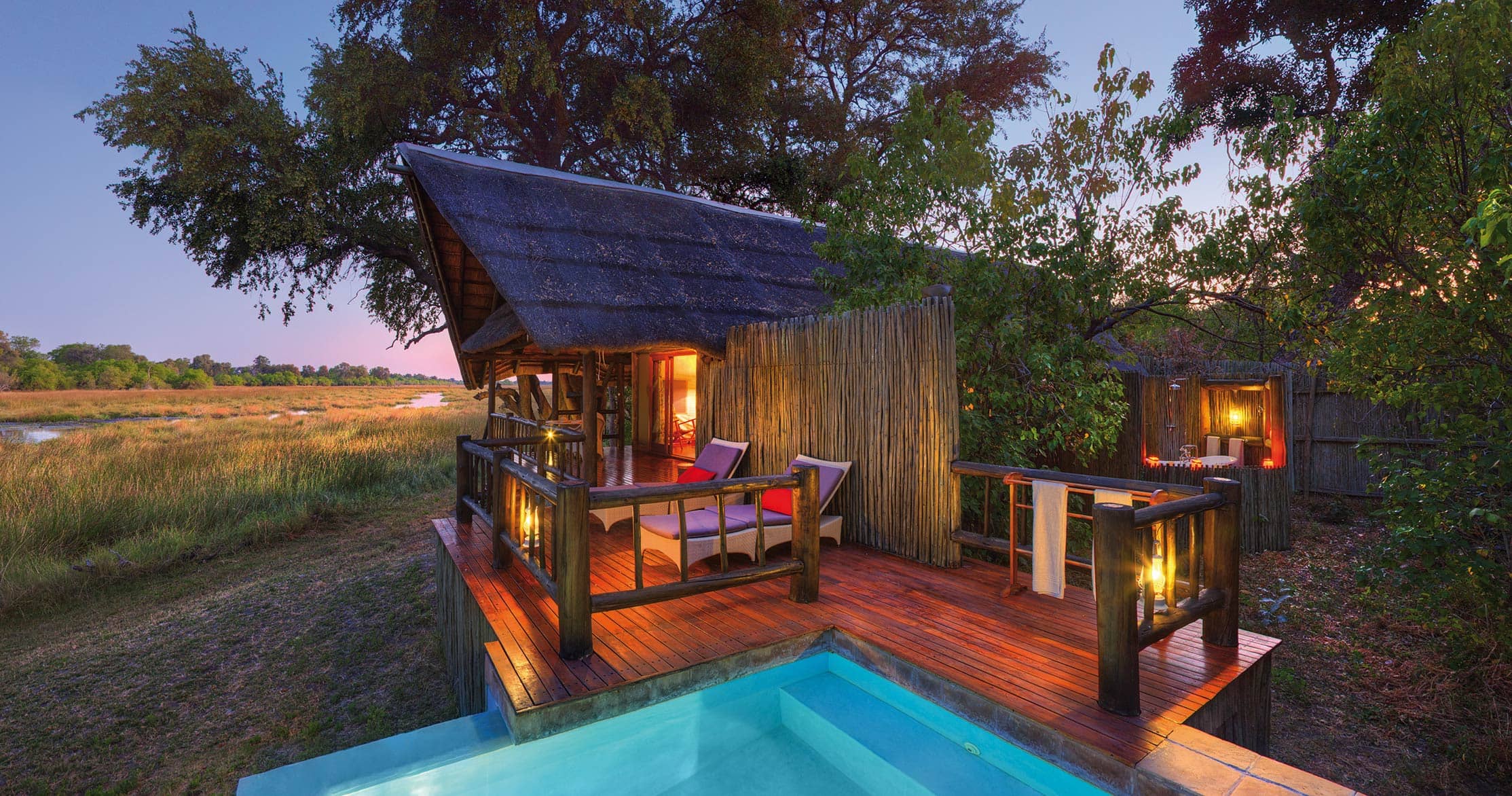
Raw. Regal. Untamed. Botswana is Africa at its most untouched, a land where silence stretches across salt pans, wildlife roams free and unbothered, and the natural world unfolds in breathtaking stillness. Often called one of Africa’s last true wildernesses, Botswana offers not just a safari, but a profound encounter with raw, untamed beauty. From the shimmering waters of the Okavango Delta to the vast emptiness of the Kalahari Desert, it’s a destination that awakens something primal and peaceful in the soul.
At the heart of this country lies the Okavango Delta, a UNESCO World Heritage site and one of the most unique ecosystems on Earth. Each year, the delta floods, transforming arid land into a labyrinth of channels, lagoons, and islands teeming with life. Glide silently through the water in a traditional mokoro canoe as elephants bathe nearby, watch leopards prowl along riverbanks, and listen to the call of fish eagles echoing through the air. It’s a place where the rhythm of the wild is uninterrupted, ancient, and sacred. In the north, Chobe National Park is famed for its massive elephant herds—some of the largest concentrations on the continent. Here, boat safaris along the Chobe River offer close-up views of hippos, crocodiles, and elephants cooling off at sunset. It’s one of the few places where wildlife encounters feel intimate and unhurried, free from crowds and spectacle.
The Makgadikgadi Salt Pans offer an entirely different kind of wonder—an endless, otherworldly expanse where the horizon seems to disappear. During the rainy season, zebra and flamingos migrate here in a surreal spectacle. At night, the pans become a mirror to the stars above, offering some of the clearest skies on the planet.
But perhaps Botswana’s greatest strength is its conservation-first ethos. With a low-impact, high-quality approach to tourism, the country prioritizes sustainability and protection of its natural heritage. This has created some of the most exclusive, remote, and meaningful safari experiences in the world. Whether staying in a luxury tented camp or a community-run lodge, travelers here are supporting a model that respects wildlife, culture, and the delicate ecosystems that sustain both. Botswana doesn’t shout—it whispers. And in its quiet, you’ll find awe, humility, and a connection to the Earth that’s as rare as it is unforgettable.
The best time to visit Botswana depends on your interests. The dry season (May to October) is ideal for wildlife enthusiasts, as animals congregate around water sources, making them easier to spot. The weather is also more pleasant with cooler temperatures. If you’re interested in bird watching, the wet season (November to April) is the best time, as migratory birds arrive during this period and the landscape is lush and green. However, some areas may be inaccessible due to heavy rains. For exploring the Okavango Delta, the best time is from June to August, as the Delta is at its peak during this period. This is the ideal time for water-based activities like mokoro (traditional canoe) trips.
